

Game Changer Model
TL;DR · XYZ AI
Perpetual decentralized
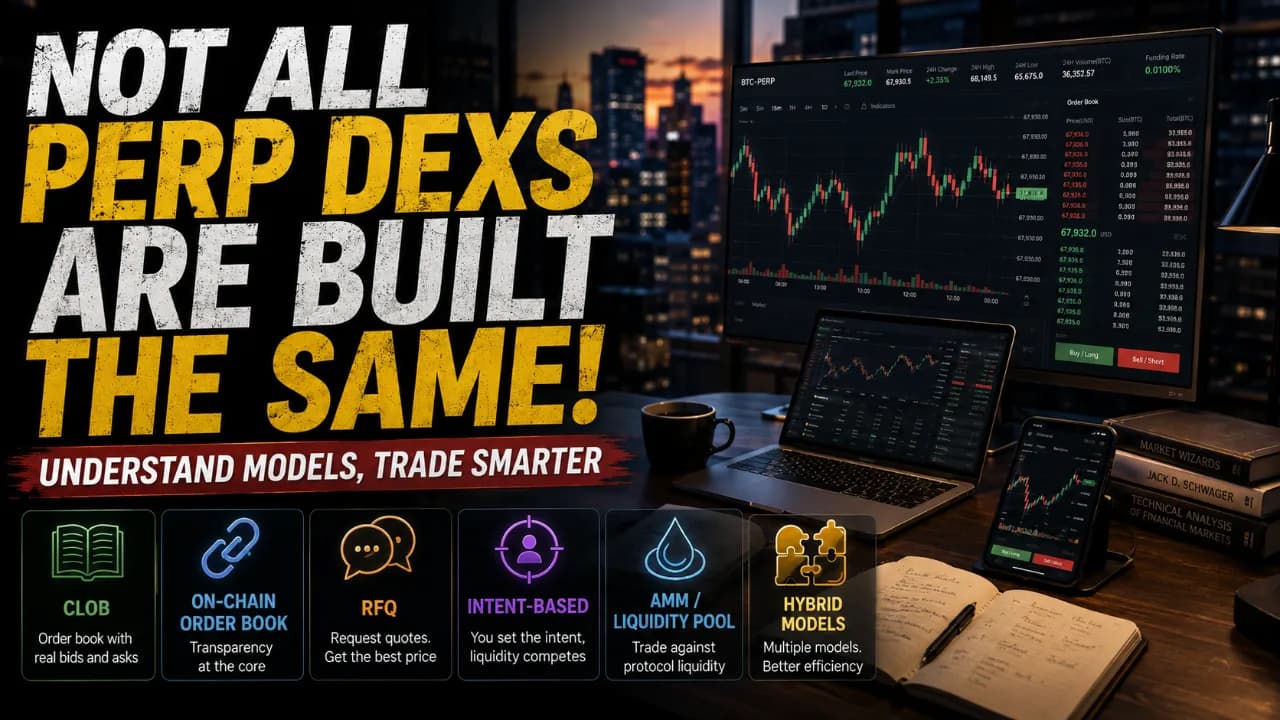
PERP DEXs ARE NOT ALL BUILT THE SAME 👀
Everyone talks about volume, TVL and points.
But almost nobody asks the more important question:
How does your trade actually get executed?
There are several major models:
🥇CLOB / Order Book
Think Binance-style trading.
You place a buy order → it sits in the book → another trader/MM sells to you.
Example:
BTC
Bid: $118,000
Ask: $118,005
Your order gets matched against available liquidity.
Examples:
→ Hyperliquid
→ Lighter
Best for: active traders, limit orders, tight spreads and transparent price discovery.
🥈Fully On-Chain Order Book
Same basic idea as a CLOB, but the key difference is where the order book/execution infrastructure lives.
Example:
You place a BTC limit order.
Instead of relying heavily on an off-chain matching system, the protocol is designed around on-chain order-book infrastructure.
Example:
→ TxFlow
The interesting part here is the trade-off:
Transparency + verifiability vs performance + infrastructure complexity.
🥉RFQ
RFQ = Request For Quote.
Instead of looking at a public order book, you ask market makers:
“I want to buy $1M BTC. What's your best price?”
MM A: $118,020
MM B: $118,012
MM C: $118,005
You take the best quote.
Examples:
→ variational
→ Other institutional/RFQ-style venues
This can be very attractive for large trades where you don't want to push through an order book.
4. AMM / Liquidity Pool
No traditional order book.
You trade against protocol liquidity.
Example:
You want to long BTC.
Instead of matching with another BTC seller, your position interacts with the protocol's liquidity/risk system.
Examples:
→ GMX
→ Gains Network
The liquidity model is completely different from Hyperliquid.
5. Hybrid Models
Why use only one mechanism?
Some protocols combine multiple liquidity sources.
For example:
Order Book + AMM + JIT Liquidity
A trader submits an order → existing order-book liquidity can fill part of it → JIT makers can compete for the flow → other liquidity mechanisms can help complete the trade.
Example:
→ Drift